The case for comprehensive sex education
A positive & affirming approach to sex ed!
Unlike other approaches that use fear or shame-based teaching methods and focus on abstinence-only education, comprehensive sexuality education (CSE) is grounded in the belief that people of all ages, abilities, gender identities, and sexual orientations have the right to developmentally appropriate, medically accurate sexual health education, taught through an inclusive, affirming, and shame-free lens.
More than just facts !
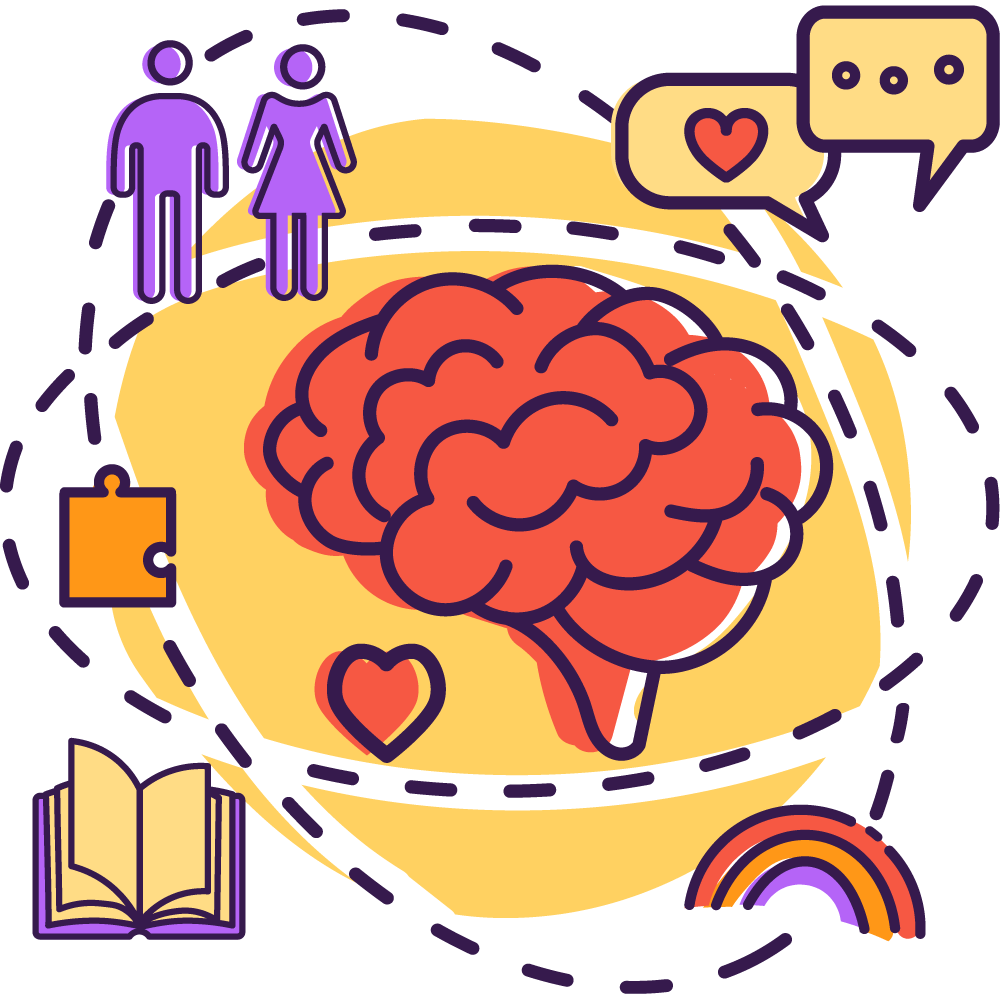
CSE is a sex-positive, inclusive approach to sexuality education that covers a broad range of topics (see FAQ section to find out more). It is increasingly being recognized and advocated for, both nationally and globally, by leading sexual and reproductive health organizations.
CSE goes beyond physical health!
CSE doesn’t just address physical health, such as STI & pregnancy-prevention, it also promotes the exploration of feelings, values, attitudes, decision-making, and critical thinking skills—all within a learning environment that fosters openness, respect, equality, and inclusion.
Comprehensive Sexuality Education builds important relational skills
Components of quality CSE programs include:
Learning healthy communication skills

Improving sexual decision-making

Reducing shame and dispelling common myths associated with sexuality

Identifying personal values

Understanding the components of healthy relationships

Building empathy for self and others

Improving media literacy

Learning the fundamentals of sexual and reproductive health

Understanding how to find reliable information and how to detect false or misleading information

Learning about consent




Frequently Asked Questions about Comprehensive Sexuality Education
-
Since the 1980’s there have been different debates and schools of thought on how to approach and implement quality sexuality education, and which information to include in sex ed curriculum.
Research shows that when young people receive comprehensive sexuality education over time, they’re more likely to make safer choices, like delaying sexual activity, using contraception, and are less likely to contract an STI or be faced with an unplanned pregnancy.
Although the majority of parents overwhelmingly support a broader approach to sexuality education, there are still teaching practices and policies in place across the country stipulating that abstinence-only until marriage (recently rebranded as sexual risk avoidance) is the only method that can protect against contracting an STI and/or prevent unwanted pregnancy. These programs can promote fear and guilit, and often seek to shame sexually active young people.
Abstinence-only curiculae has been associated with higher teen pregnancy rates, with even higher rates for non-white youth. Alternatively, states that implemented comprehensive sex ed and/or STI education that covered abstinence, along with contraception and STI prevention skills, tended to have the lowest teen pregnancy rates.
See The State of Sex Education in NC for further information about how our state stacks up to the rest of the country.
-
According to SIECUS’s Guidelines for Comprehensive Sexuality Education, CSE promotes sexual health in four ways:
It provides medically accurate information about human sexuality,including growth and development, anatomy, physiology, human reproduction, pregnancy, childbirth, parenthood, family life, sexual orientation, gender identity, masturbation, contraception, abortion, sexual violence, and sexually transmitted infections
It helps young people develop healthy attitudes, skills , values and beliefs about human sexuality by creating spaces to explore their community’s attitudes, their family’s values, and their own critical thinking skills to help them better understand their responsibilities and commitments to their families and to society as a whole.
It helps young people develop communication, decision-making, assertiveness, and refusal skills so that they are prepared to enter relationships that are centered on caring, non-coercive, reciprocal and mutually satisfying experiences when they are adults.
It encourages young people to make responsible choices about sexual relationships by practicing abstinence, postponing sexual intercourse, avoiding early sexual intercourse, and using contraception and safer sex techniques when they do become sexually active (NGTF, 2012)
-
SIECUS(Sexuality Information & Education Council of the U.S) has released the 3rd and most recent edition of the Guidelines for Comprehensive Sexuality Education, which originated from the work of the National Guidelines Task Force. These guidelines informed the development of the updated National Sex Education Standards, which are widely used, distributed and supported by professional sexual health educators, administrators, and curriculum developers.
An inclusive sexuality education program should include the following topics that are introduced at the appropriate developmental stage, and ideally repeated in different grades, using age-appropriate messages and activities.
Human Development -Reproductive Sexual Anatomy and Physiology, Puberty, Reproduction, Body Image, Sexual Orientation, Gender Identity
Relationships - Families, Friendship, Love, Romantic Relationships and Dating, Marriage and Lifetime Commitments, Raising Children
Personal Skills - Values, Decision-making, Communication, Assertiveness, Negotiation, Looking for Help
Sexual Behavior - Sexuality Throughout Life, Masturbation, Sexual Behavior, Abstinence, Human Sexual Response
Sexual Health - Reproductive Health, Contraception, Pregnancy, Abortion, Sexually Transmitted Infections, Sexual Abuse, Assault, Violence, and Harassment
Society and Culture - Sexuality & Society, Gender Roles, Sexuality and the Law, Diversity, Sexuality and the Media
-
Fortunately, there are quality resources available for free or low cost! You can access a wide range of materials, including curriculum, conversation guides, educational videos, lesson plans, and webinars to help you feel more confident talking about sex and sexuality.
No matter who you are—whether you're teaching or raising kids, in community leadership, or supporting young people in different capacities—you can find helpful resources to start open, respectful conversations about sexuality at home and in your community. Learn more by going to our Sex Positive Resources page.
-
To see what’s currently being offered in the Triangle, check out the Find a Community Program page. Also, go to our Sex Ed in NC page to learn more about what’s happening at the school level. If you don’t see what you’re looking for, contact us!

“Comprehensive sex education that includes dating violence prevention and consent empowers young people to understand and respect their own and others’ boundaries. It provides them with tools to form healthy, supportive relationships while fostering a culture of mutual respect and communication.”